About Air Swept Pulverizer
Air Swept Pulverizer
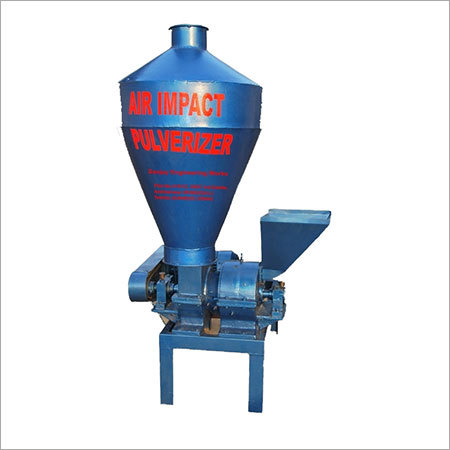
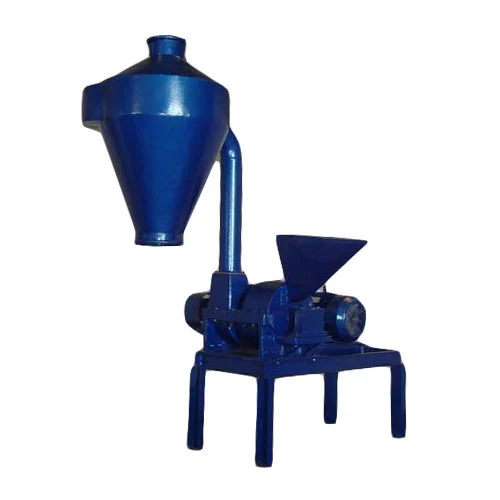
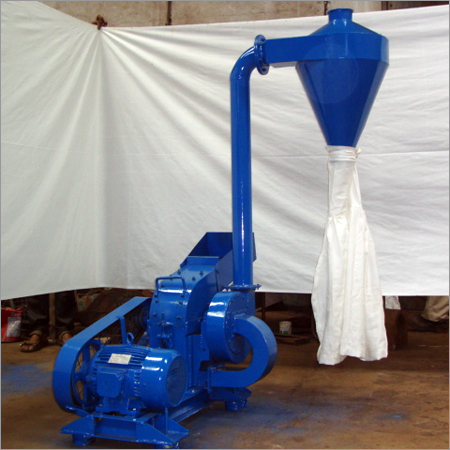
Air Swept Pulverizer is a medium sized industrial machine that makes it quick and efficient to transform substances in to fine free flowing granules. It can be used in a number of industrial sectors such as chemical, paint, dye, pharmaceutical, and many more. Air Swept Pulverizer run on standard alternating power with a voltage in between 220 to 440 volts. The whole unit is mounted on a rigid mild steel frame that leads to high durability and stability.
Features
- Designed for medium fine and fine size reduction of dyes, pharmaceuticals, intermediates, colors, chemicals, pigments, minerals and bulk drugs.
- Grinding, classifying and conveyor done all in one single operation.
- The mill uses air classification, which does not require screen hence the problem associated with screen like choking, puncturing etc do not arise.
- Easy to dismantling & cleaning.
- No dusting from feeding hopper because feeding is done under negative pressure.
- Less dusting on discharge side because of use of cyclone separator with air - ballons.
- M.O.C : M.S, S.S- 304 / 316
- Out put 50 to 200 kgs/hrs depends upon characteristic of material
Efficient Industrial Grinding SolutionDesigned for industrial environments, the Air Swept Pulverizer delivers rapid and uniform grinding with minimal maintenance. Its mild steel body provides longevity and resistance to wear, ensuring smooth operations over extended periods. Whether processing minerals, chemicals, or other bulk materials, this equipment meets the demands of high-throughput production.
Advanced Air-Swept TechnologyThe air-swept mechanism integrated in this pulverizer enhances particle reduction while controlling dust emissions. This advanced system helps maintain a clean workspace and promotes operator safety, making it a preferred choice for modern factories requiring streamlined processing and superior output quality.
FAQ's of Air Swept Pulverizer:
Q: How does the Air Swept Pulverizer function in industrial applications?
A: The Air Swept Pulverizer operates by introducing air flow to assist in grinding materials, making the process faster and more efficient. The air sweeps through the chamber, carrying fine particles away and ensuring consistent processing for high-volume industrial use.
Q: What materials can be processed using this mild steel Air Swept Pulverizer?
A: This pulverizer is suitable for a wide range of industrial materials, including minerals, chemicals, pigments, fertilizers, and other bulk substances. Its mild steel construction allows for robust handling of various tough and abrasive materials.
Q: When is it ideal to use an Air Swept Pulverizer in manufacturing?
A: An Air Swept Pulverizer is best used when you need rapid, dust-controlled, and uniform grinding of large quantities of raw materials. It's particularly advantageous during continuous production, batch processing, or when strict product consistency is required.
Q: Where can this equipment be installed for optimal performance?
A: The pulverizer is designed for installation in industrial settings such as manufacturing plants, processing facilities, or workshops. It requires a well-ventilated space with proper safety measures to accommodate its operational airflow and material handling needs.
Q: What is the process followed by the Air Swept Pulverizer during operation?
A: During operation, raw materials are fed into the pulverizer chamber. Air is introduced to sweep the finely ground particles away, reducing buildup and ensuring efficient separation. This process results in a uniform product with minimal dust and residue.
Q: How is the equipment beneficial for manufacturers in India?
A: Manufacturers benefit from its durable mild steel construction, enhanced throughput, and automated dust control. The air-swept technology ensures consistent quality, lowers labor requirements, and helps meet stringent production standards while maintaining operational safety.
Q: What usage precautions should be observed with the new Air Swept Pulverizer?
A: Operators should follow manufacturer guidelines, ensure regular maintenance, and verify proper ventilation during use. Wearing appropriate protective equipment and monitoring for blockages or unusual noises will help maintain safety and extend equipment life.

 Send Inquiry



 Send Inquiry


 Send Inquiry